When Did We Stop Imagining Together?
On polycrisis, survival states, and the future we carry in our pockets.
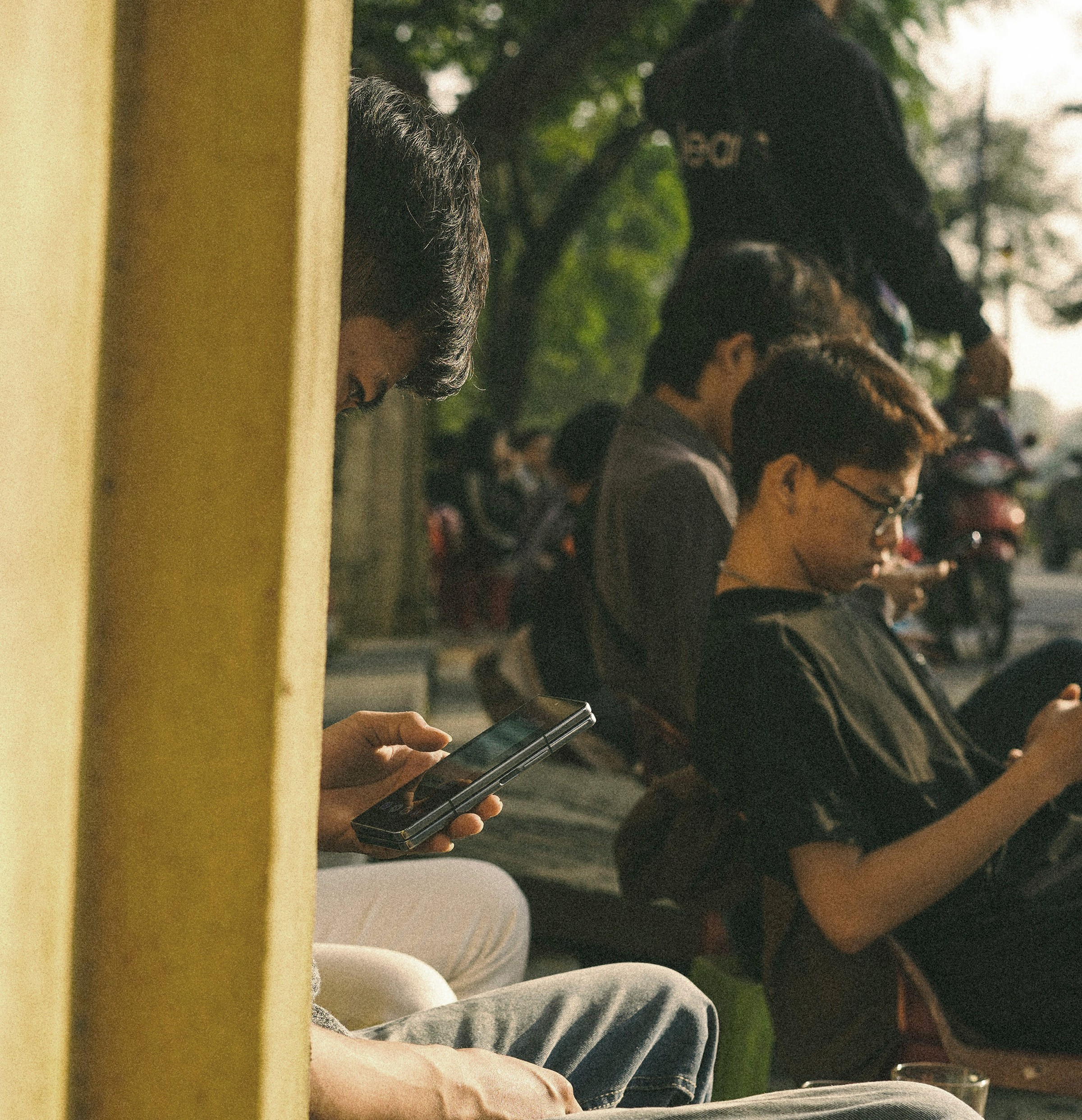
There is a particular tightness that shows up in the body these days: the way your jaw sets halfway through the news in the morning. The way your shoulders climb toward your ears when the headlines flood your WhatsApp. The way something in your chest tightens well past 11pm, scrolling, well past when you meant to stop. The way you catch someone's eye when you answer "how are you?" with "well... you know..."
You know the feeling. It's sadness, grief, hopelessness, and anxiety, all entangled, and often too overwhelming to untangle alone, and it's a direct reaction to the polycrisis we're living through: climate disruption, geopolitical instability, economic uncertainty, and technological upheaval, arriving not one at a time but entangled, each amplifying the others.
We're all feeling this, and somehow, each of us feels it alone. Martin Seligman spent decades studying what he called “learned helplessness”: what happens when people face repeated situations where nothing they do seems to change the outcome, until the brain makes a calculation and stops trying. It isn't a personal failing. It's a predictable human response to an impossible set of conditions.
But helplessness doesn't stay this small. Researchers Uzbay and Erdoğan call the larger version “collective learned helplessness”: the shared passivity that builds when whole communities face the same walls for long enough, until "why try?" stops being a thought anyone consciously has and just becomes the air in the room. The irony, of course, is that we are each suffering through this collapse alone, without realising everyone else is in the exact same boat.
But what happens to our imagination specifically? We stop believing that thinking and talking about the future can make a difference, so we stop talking about it, or stop thinking about it altogether.
Rob Hopkins is one of the people who hasn't stopped. He's spent two decades acting on a belief most of us have quietly given up on: that climate change, at its root, is a failure of imagination, and that the fix isn't a sharper report or a cleverer forecast, it's people picturing a different future together, out loud, in the same room. In a recent essay, he put it this way: "If we can bring joined-up, systemic thinking to this, and a mindset that seeks solutions and possibilities, the potential of what we could create if we embrace those possibilities remains extraordinary." He isn't saying the problems are smaller than they look. He's saying they're not finished yet, and what happens next depends on whether we can still picture our way through them, together.
He didn't just write that down. In 2005 he co-founded Transition Town Totnes, in Devon, and put it into practice: rooms full of neighbours experimented with building a local currency, the Totnes Pound, that more than seventy local businesses accepted, and wrote their own plan for weaning the town off fossil fuels. None of it came from inside one person's head.
That's the whole thing, really. I keep coming back to something bell hooks said: "what we cannot imagine cannot come into being." A future that exists in just one person's head is not yet a future, is it? It's a bit like a stone kept in a pocket: real, with real weight, but not doing anything, and nothing doing anything to it, until you put it down somewhere someone else can pick it up. That's what it means to say something out loud: someone else pushes back on it, adds to it, or is changed a little by hearing it.
Writer Ursula K. Le Guin called this the carrier bag theory of human culture: the idea that our most transformative early invention wasn't the spear - a tool of individual dominance used to strike from a distance - but the vessel, the bag used to bring gathered things back to the group so everyone could decide what to make of them together. An unshared idea is just a stone in a pocket. Shared, it becomes something held in the container of the room.
Sociologist Ruha Benjamin takes this further in her book Imagination: A Manifesto: she argues we are already living inside someone else's imagination, that every system around us, every rule, every piece of technology, was first imagined by somebody, in a room, usually without the rest of us in it. Not imagining is never neutral. Someone is doing it regardless. The question is only whether we're in the room.
Benjamin and Hopkins are both pointing at the same thing, really: a future is not something one mind holds successfully on its own for very long. This capacity, to hold a future with someone else rather than just inside your own head, is what we mean in Knowledge Mindfulness by the three windows, and they're simpler than they sound. There is an Inner Window: what you value, what you sense, what you've never quite examined. There is an Outer Window: the facts, the shape of the world as it actually is. And there is a Relational Window, what happens between you and another person when you both let something unfinished sit in the room, out loud, before either of you knows what it's going to become.
When all three windows are open at once, we call that the Golden Triangle. Most of us know what that feels like, even without a name for it: the rare conversation that leaves you thinking differently than when you walked in. When the pressure gets too high, though, that space narrows, and we get thrown out of it into what we call survival states. We adapt by taking on temporary disguises that feel like protection - retreating behind screens or handing down rigid plans - even as those shapes cost us our genuine connection to each other. AI didn't create this pressure. Like everything else, it just accelerates it and amplifies it, which is part of why two of the three states below involve a screen.
In Hyper-Orchestration, driven by a hidden fear of inadequacy next to a machine that has an answer for everything, we stop asking anyone else what they think and hand down a plan instead, because listening takes a slower, more vulnerable pace than our anxiety allows. In Hypo-Engagement, overwhelmed by the vulnerability of genuine human interaction, we retreat behind a screen entirely, asking a machine to solve what a real conversation would have solved, because the unpredictable reality of another person feels like more than we can hold. And in No Engagement, the quietest and most dangerous of the three, we stop asking what could be different, stop noticing the signals, and let all three windows close altogether, usually without even noticing we've done it.
All three feel like protection. All three are actually just different ways of leaving the room before the real work starts.
But what does it look like when a community refuses to leave the room - when, instead of retreating into private survival states, they choose to hold that Relational Window open together against an overwhelming force?
There is a 1994 Studio Ghibli film, Pom Poko (directed by Isao Takahata), that captures this exact struggle. It’s a story about a community of tanuki - mythological, shapeshifting raccoon dogs - watching their forest outside Tokyo get flattened for suburban housing developments they had no say in.
They don't scatter into private silos. They gather. They pool their collective memory and practice the ancient art of shapeshifting together. In the film’s climax, facing impossible odds, they execute one last, breathtaking feat of shared imagination: a massive, miraculous street parade that temporarily transforms the bland suburban concrete back into a vivid, living world of myth and spirit.
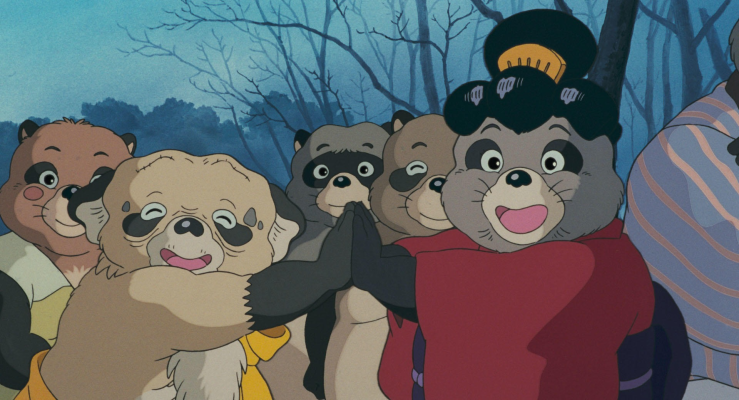
Pom Poko (Studio Ghibli, 1994)
It doesn't stop the development. The bulldozers come anyway. Some tanuki don't survive; others survive only by giving up their true shape, putting on suits, and blending invisibly into human corporate life. But the film’s bittersweet thesis is profound: their grand parade was never about guaranteeing a fairy-tale ending. It was an act of collective defiance—a refusal to let the future get built as if they had never existed, or as if no other way of living was ever possible.
So when did we stop trusting our own imagination? Maybe the honest answer is that we never trusted it alone. Imagination was never meant to be a private burden kept in a pocket, it was meant to be practiced in the company of others.
Here is a question worth asking someone else this week - not just yourself, but out loud, over coffee, or across a table: what future have you been picturing lately that you haven't told anyone about?
Because someone is designing the future right now. The only real choice we have is whether we stay in our private disguises - or step back into the room, take our thoughts out of our pockets, and start putting on the parade together.